The Shape of What Remains in the World

•January 20, 2025 • Leave a Comment

Over ten years ago, I wrote a story called “Monuments” that appeared in a collection published by Arlen House/Syracuse University Press. The voice of my narrator, Teresa came to me. She had been waiting for the school bus with her six-year-old daughter when her daughter darted in the road and a speeding truck hit her. She was killed instantly. This is not a spoiler because the novel (and story) open ten years later. When Teresa, also called Tess came to me, her voice was distinctive. She was a bit of a smartass, sometimes self-deprecating, and absolutely stuck in grief for a decade. She also possessed tenacity, a quality I admire. I wrote her but I was routing for her to find her way out of the darkness. In the world of writing, I am what is called a “pantser”. This means I write “by the seat of my pants” I am guessing. It is the opposite of a plotter. I have no fondness for outlines though I’m a compulsive reviser of my work. My story is now a 300 page novel to be released on February 18, 2025. It went through five beta readers, numerous editors, two critique groups, and years and years of my own revisions. I believe it is ready for the world.

How do you get ideas? The best tool for any writer is observation. It’s free! Get out in the world and look around. That man with the spot of whisker he missed while shaving and the stain on his jeans has a story. The woman with the green silk scarf and a diamond ring as big as a snail holding the hand of a little boy who looks nothing like her has a story. You owe nothing to reality. Please do not write for revenge (except in a journal). Fiction gives you permission to let your imagination run the show. Be outrageous—especially in first drafts. If you are usually orderly, try some disorder. If you are messy, try being more logical. The important thing is to break out of your habits so you can feel free on the page. My characters run the gamut in age and circumstance. All fiction needs conflict and as a writer, I thrill to complicate their lives. As a pantser, I do not always know what will be their undoing but I trust the process. Occasionally, the complications do not come to me and the story is put aside. Love isn’t perfect and people hurt each other unwittingly. Seemingly kind people may be scam artists. Trauma changes us and my characters reflect this. I am also a poet so I believe in the power of an image. Novels or stories without layers bore me. I look for subtext. A winter storm is exciting and even more so when the ice on the road foreshadows the tension between my characters. Like anything, this can be overdone and quickly get unbelievable so a light touch is necessary. Read your passages aloud. It helps to hear your own writing. You’ll quickly learn to discern what is not working.

Write as often as you can. I rebel against routine but I know writers who get up early every morning and write for two hours. I try to write something every day, even if it is my blog, a rant, a letter. Writing every day makes your writing more fluid. It exercises the part of your brain that needs to push out of the ordinary. Be outrageous. I aspire to be disciplined in my writing habits but I settle for being prolific. I have hundreds of stories and likely over a thousand poems. I read every day. Writing and reading go together. If you are stuck, pick up a book. I read widely from a variety of genres but I definitely prefer fiction. In the last month, I read James by Percival Everett, Shred Sisters by Betsy Lerner, Long Island by Colm Toibin, How to Build a Boat by Elaine Feeney, and Without Exception by Pam Houston. I also read lots of poems and revisited Tiny Beautiful Things by Cheryl Strayed. I am not going to review any of these for my readers because I believe you should read them for yourself or choose your own books.

I appreciate all my readers, many of whom are also writers—even if they have not yet claimed that. Writing is a way of consciously living in the world. I do not know another way to live, having been a writer since my teens. You may be an artist, a runner, a teacher or mentor, a musician. All of these are ways of living consciously. Be courageous in whatever you do. It benefits you and the world, even if it seems almost imperceptible at times. Thank you.

My book will be widely available February 18, 2025.

If you choose to patronize indie bookstores you can order it after February 18, 2025. It is also available in ebook and I hope it will be an audiobook in the future.

If you are interested in having me visit your book group (remote or in-person), your class, your store or library, reach out to me. http://www.lisactaylor.com

Solstice, Light, and Grief

•June 20, 2024 • Leave a Comment

June brings me to a shore place I’ve returned to for most of my adult life. I pass dozens of houses rented in seasons past, remember the bicycle rides where I once dodged scooters and skateboarders. New businesses crop up and familiar ones disappear. Yesterday, we discovered a new restaurant with extraordinary food, more akin to New York City than a tiny beachside town. There are other surprises like this flowered china teacup glued to a post in the midst of a flower garden. I returned to look at it and it transformed into a gathering of people in operatic style finery, sipping tea amid the roses, hydrangea, honeysuckle, and lilies. Whimsy is an integral part of this town. I miss it when I leave. It is as if I’m entering a story and I never know how it will play out. The alleyways, porticos, murals, and street musicians add to the enchantment.

Someone hurt me so I walked five miles, paused to smell roses and honeysuckle —my favorite, pocketed a perfect rock, and bought a flamboyant scarf and glittery stud earrings. All of this slowed my heart rate and cleared my head. There is much to be sad about in the world today and I know a personal hurt is tiny in the larger context. I also know that how we relate to others is a reflection of how we interact in the larger world. I strive to be kind and though I don’t always succeed, I continue to work at it. I love people–babies, toddlers, children, teens, twenty, thirty, forty, fifty, sixty, seventy, eighty, ninety somethings and beyond. All have something to offer and I try to view interactions with curiosity and enthusiasm. I can’t control the world around me but I can vote, volunteer, help a child, write books. My power in the world is my ability to write and connect with people. One of the reasons I enjoy public readings is the interaction. How can I write without experiencing? How can I understand the impact of my words without listening to others?

I am grateful to be in this place for a short time. I carry within the sharp smell of the ocean at low tide, the broken shells, the skittering crabs and doe-eyed seals, and so many unparalleled sunsets here. I’m working on the third draft of my second novel and I will go back to that, hoping that one day soon that story, a very different one from the one that will be published next spring, will find a good publisher. My characters are never people I know but I hope they are as complex, infuriating, and redeemable as most of us.

A woman in dreadlocks left her large gold purse on the bench and I reported it to the yellow clad police officer who looked through it to find her name. A man let me pet his small dog that he said was not a puppy, the barista with kind brown eyes and a thin moustache made me a perfect latte, Beverly at our favorite ice cream place knows everyone by name. Tonight, friends in town will drop by and in a few days, more friends will share a bonfire on the beach and s’mores. The air is crisp and the ocean cool but not freezing. This is the 2024 summer solstice, a summer of change, upheaval, and hopefully healing.

It’s Complicated

•April 13, 2024 • Leave a Comment

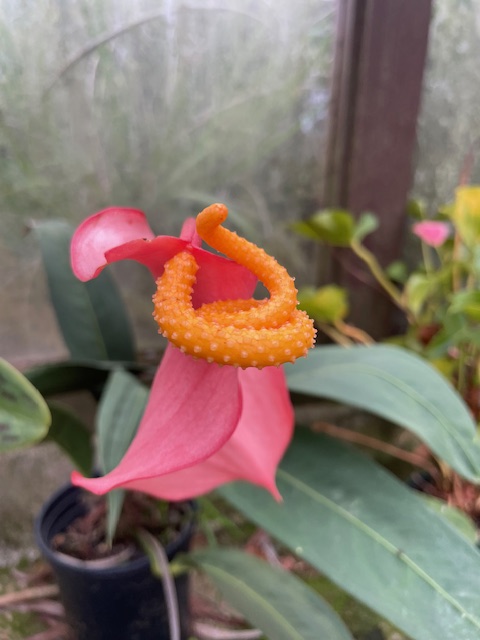
This is sometimes stated as a relationship status on social media. Aren’t all relationships complicated? Seen in Kona, Hawai’i in January, this flower looks like something Dr. Seuss might have imagined. Its colors and protrusions defy conformity.

I walk around my house or go on my favorite walk with characters accompanying me. Just when their lives seem to be going smoothly, disaster pulls up at the stop sign. This isn’t a pessimistic view of life. Stories help us process challenges. Even children’s stories throw in a tragedy or two. Remember when Bambi’s mother was killed by a hunter and Mufasa, the Lion King, was killed by his evil brother? Sounds downright Shakespearean, doesn’t it? Little Bambi and little Simba experienced tragedy at a tender age. How many of us get through our adolescence and young adulthood unscathed? Perhaps these stories prepare us for the ups and downs of life.

I used to have a tee shirt my father gave me that said “Nothing Bad Happens to a Writer: It’s all Material”. I wore that shirt out. My father read me poetry at a young age. To be read to as a child is the great gift. Sadly, many children live in households without books and that is another kind of poverty. Developing imagination is not a luxury. In the harshness of today’s world, creative solutions are necessary. If we can imagine a different outcome, we can work toward making it happen. We all need to be visionaries to change the trajectory of our lives and the lives of others.

I love poetry and turn to it when I need inspiration and comfort. It helps me to see what it is possible to do with language. Poetry transforms words into vast landscapes. It memorializes our most human qualities. Stories are another kind of comfort. We turn to them to explain what we cannot articulate.

Life in the modern world is complicated. There are wars, shootings, people living in poverty, and daily tragedies around the globe. There are also gifted musicians, writers, artists, actors, and dancers who help us transcend the news cycle. They dignify our world. It is the charge of any artist not to look away but to somehow translate tragedy so it becomes art. They do not provide answers but art may provoke questions and engagement, those tentative steps toward change.

I return to the complications I create for my characters understanding that I have a sacred obligation to move them along in their evolution. Looking away is not an option. It’s complicated to be alive but life offers mountain paths and sandy trails. It offers the bleeding red and orange of a sunset and the mushroom gray of dawn. We can look out windows, let a snowflake melt in our hand, and help a neighbor unload groceries. We can register to vote, volunteer at a soup kitchen, drive someone to a medical appointment. Nature and relationships are complicated but humans are resilient and nature regenerates.

Grief and the Scarcity of Light

•December 6, 2023 • Leave a Comment

Are there ordinary years when the progression of seasons simply showcases the landscape and its parade of contrasts? When I was a child, summer seemed longest, probably because it offered a break from a schedule and invited me into a world I could explore by walking or biking. Two months became a season of adventure, solitude, the wonder of butterflies and the chalky residue of moths. I examined Japanese beetles, pricked my fingers on thorns, dodged bees, and marveled over perfect polka dots on ladybugs. I collected flat stones, mica, and pine cones and hid them behind the large buttonwood tree in my yard. I am drawn still to smooth stones, intricate shells, and cobalt blue beach glass when I am lucky enough to find them.

These days, I am unable to separate my grief at the state of the world from encroaching winter with its early darkness and monochrome vistas. As always, I long for the sea and its cacophony, a rude but welcome intrusion on darker thoughts. I do not look away but sometimes it becomes necessary to detach from events I cannot control. I’ve never been more aware of my helplessness in the wake of such conflict and disinformation. I use writing as a buffer, a habit developed as a teen scribbling in the rainbow-colored notebooks my father bought for me at an art and pottery store.

What does one do with the grief? Everyone experiences loss: divorce, death, war, relocation, natural disaster. Each day is a reminder of something we can never get back like the death of a friend or family member, the agility of our twenty-year-old self, or the excitement of first passion. I remind myself of what I’ve gained–writing, travel, acquired wisdom attained through years of study and living. How can I channel this learning into productive action? There has never been a more important time to be alert and aware but it is equally necessary to nurture and love each other.

From the young child in my life, I learn to immerse myself in the moment, making footprints on the snowy path, clapping my gloves together, welcoming constellations in early darkness. Nights are beautiful here with a veritable light show of stars. The night sky always makes me feel small and that is what I most want to be in the wake of enormous grief. Small does not mean insignificant. It is a way to put the problems of the world in perspective. Last week I saw my first sun dog, a rainbow-like phenomenon common in places like Alaska. All firsts are important because they add to my library of experience.

My great-grandmother, Annie spent occasional weekends at my childhood home. She died at 96 when I was twelve. One spring day, she walked with me, using her cane for balance. That was the day she saw her first rainbow. She must have been in her nineties at that point. I vividly remember her deeply lined face lit up with joy. At that point, I aspired to create as many good moments for her as I could because I loved her with the innocence of a child. I’d play cards with her for hours even though I’m not much of a card player. At some level I was aware that she would die but death was still abstract. I lost two other people including a friend in the same year my great-grandmother died. At that point, I viscerally knew that loved ones could disappear forever, a reality I still have trouble accepting.

Solstice is fifteen days away and I mark it as the beginning of the return of light. I also welcome it as a time of gathering in and reaching out. As much as I welcome solitude, I need connection. Like the contrast of seasons, a good conversation and a shared meal is like the first spring morning when blossoming again seems possible. We will need each other in the coming months. I pledge to reach out at least as much as I gather in. May we all hold onto hope and turn that hope into positive action.

Sometimes I Live by the Sea

•June 14, 2023 • Leave a Comment

I arrived at a place both familiar and elusive. Cool, misty mornings give way to cloudless afternoons where I watch cormorants dive and surface with their catch. Wading amid tiny translucent crabs and innocuous jellyfish reminds me that I’m an insignificant part of this ecosystem. Our rental house is across from the bay, with a small private section that is quiet except for a few shell and beach glass hunters and dog walkers. The evenings are breezy, salty wind ruffling curtains. We have rented many houses and cottages on this small strip of land, spent hard-earned weeks recovering from our challenging jobs and the schedule of our children. All of us view this place as a kind of sanctuary. We have traditions here, ice cream at Lewis Brothers, seafood at Mac’s, beach walks, bicycle rides, friend meetups. I’ve spent birthdays and anniversaries here, watched numerous Carnival Parades, and shivered through the unrelenting January wind at Race Point. I’ll be here for my birthday this year and dear friends will come to join our entire family—all in one place though we live thousands of miles apart. When I leave, I’ll ache to return, though it is more complicated now that I live far away.

I do not know why certain landscapes speak to me. Mountains are stoic and hold their secrets close. For me, the cacophony of the sea, its crescendos and dips, briny odor, and the way it teems with life—swirling seaweed, tiny fish, scurrying crustaceans, barnacle-encrusted rocks remind me of my own insignificance. The sea nags me to write wildly without holding back. I have memories of my children running into the sea, digging in the sand, making trenches with dutifully lugged pails of water. Now adults, they still hold this place close. The youngest member of the family, just two, builds sandcastles, watches fish, and splashes in the water as often as he can, shrieking with same delight I remember from my own kids. It is something I pass on. Although he may turn out to be more enamored of desert or mountains, I hope he will return to this noisy, joyful place and think of us.

I try to write without limits. Writing is the crest of a wave, a storm, the battering of the wind. When I leave, I will carry the moodiness and variegated colors of the sea and its possibility of danger from a rip current or shark. White sharks have returned because they feed on seals and the seals are abundant. We all survive however we can.

Living far away has made these trips harder and more expensive. When I leave, there will be a space inside of me that I’ll try to fill but it isn’t possible to replace awe with busyness, wonder with routine. Instead I’ll tamp the feelings down and pretend patience until once again I can drive, fly, or take a boat to the place I feel most at home.

Little Poems Everywhere

•April 3, 2023 • 1 Comment

It’s National Poetry Month and I’ve just returned home after a week of travel in Sedona, then Denver. My week in Sedona with friends had moments that nestle in my memory like stanzas in a poem–a hike to caves where sun patterns cast shadows around the irregular doorway, a scramble to see rock formations called Baby Bell and Cathedral Rock, and a visit at sunset to the Airport Vortex where fifty or so people gathered to watch a giant orange sun lower in a gray-streaked sky. Friends are another kind of poem, especially the kind of friends I haven’t seen for months but it feels as if no time has lapsed when we again get together. These friends have always been easy to travel with and this time was no different, though now we live thousands of miles apart.

Waiting for the train to get to the Denver Airport, I met C, an 88 year-old woman. She was with a couple that we assumed were family. She used a cane but was otherwise lively. Sitting in back of her on the train, I came to find out that the couple were strangers who helped her navigate which train to board. I also found out that she was en route to the airport to go to a literacy convention in Texas the next day. This led to a discussion about her life’s work in literacy and a recommendation of books. We agreed to help her to her airport hotel where she invited us in and we learned more—her long marriage and the death of her husband a little over a year ago, her nonprofit devoted to literacy, her travel and residency in places like the Sudan, South Korea, Turkey, and Guam, her eventual college degree that included a Master’s after an early dislike of higher education. As she put in, her husband helped her to become a scholar. C was traveling alone, depending on the generosity of strangers but also capable enough to use services to help her navigate a world designed for the able-bodied. She had a smartphone and with help had downloaded the train ticket on an app. To say meeting C was a highlight of an otherwise uneventful trip home would be an understatement. She was the best part of the drudge of travel—crowded terminals, frenzied people, and the ugliness of shops all offering the same selection of magazines and snacks. The flight was turbulent and the pilot announced that the unstable air would last for 20 minutes (half of the flight) but it calmed down after 10, thankfully. I am a nervous flier. Losing a friend in a plane crash at age 12 shaped me. I didn’t fly until age 23 and most every flight after that was a challenge until my father died in 2005, and we flew regularly to handle my mother’s needs and later her subsequent move. I fly often—for book launches and writing events, for travel to places I long to see. I never like the process of getting there but I always love disembarking in a new place, a poem or narrative awaiting me in the architecture, the weather, people I will briefly meet.

In South America in 2019, we met a couple who had spent years traveling the world. They bought a world ticket and planned out destinations and a daily budget. In March, we met up with them again in Seattle where I was attending a writing conference. They had just spent four months in New Zealand and after a brief stop home, they were headed to Europe. We have talked about this way to approach life, realizing that we have neither the budget nor the inclination to travel constantly. Part of the lifestyle intrigues me. What would it be like to awaken in a new place every day? Could I step out of daily routines? I read an article last week about routines and writing. Prolific writers have a routine. I know that a daily writing habit leads to better writing yet a part of me shuns routine. I can be convinced to take a spontaneous trip or an afternoon picnic in the mountains. I resolve to give my early mornings up to writing. This is a resolution I’ve made and broken and will try again. Writing is portable and I long to awaken in new places, seeing cliffs and the wild sea, tasting a cuisine I can’t yet imagine.

It is National Poetry Month and some writers are pledging to write a poem a day. I’ve already lost two days and since I also write fiction, I’m thinking of stories I want to write or the novel I wrote but never published. I will not be writing a poem a day but I will vow to make each day a kind of homage to poetry by living consciously. That has become overused so I’ll explain. Conscious living is, to me, a pause. Right now I’m looking out my window at the early morning sun over the mountains. The sky is gray with tatters of clouds, and a few cars make their way down one visible road. It is quiet. Most are sleeping or on their way to work, a job they love or a job they hate. I have loved many of my jobs though I hated some. An ambulance with flashing lights just went by though it’s far enough away that I cannot hear the siren. My worse jobs were drudgery–counting spark plugs in a hardware department, serving ice cream and burgers, filing records at a hospital. The best jobs allowed reinvention which is why I enjoy teaching. I have an online poetry class beginning this week. Each student will bring a story and each will be from a different geography. I will learn from them even as I guide them through readings and writing ideas.

Here is my wish for you for National Poetry Month: go outside every day. Find something you don’t usually notice, a tuft of dry grass, a puddle, a shoot pushing its way through the dirt, a shy animal. Take a different route to work or to the store or go on a hike to a place you don’t yet know. Talk to a stranger and learn their story as I did with C. Renew old friendships and make new ones. There are people with stories you need to hear. We are all here so briefly. The impression we make on others is a kind of poem. The struggling sun is a poem. Your hand holding a coffee cup is a poem. Today, I brewed my perfect coffee and drank it in a cup given to me by a writers organization in Northampton, Massachusetts where I offered a workshop some years ago. The cup reminds me of friends who live there. The coffee reminds me of my family who gifted me a wonderful espresso maker and grinder last June. And these simple moments are stanzas in the poem of my life. Go find yours.

Winter in the Mountains

•February 23, 2023 • Leave a Comment

Snow and more snow. The wind howls and the mounds of snow grow higher. It is my third winter here but in a sense, it is the first real winter. Snow means water and in this high, dry place, that is always welcomed. I’ve always liked winter: the introspection, the gathering in. It is harder here because I do not have as much community as I left behind. What I do have is a view of mountains, startlingly blue skies, and a pristine covering over dirt and leaves. I live in moments. Yesterday I wrote a book review for New York Journal of Books. I was lucky enough to review an amazing anthology of poetry: “100 Poems to Break Your Heart” compiled and commented upon by Edward Hirsch. https://www.nyjournalofbooks.com/book-review/100-poems-break-your-heart I would highly recommend this collection, newly out in paperback and worth every penny.

The Associated Writing Program Conference is in Seattle this year and I’ll be both attending and reading. I don’t know how I feel about such a large gathering after two years of avoiding such things. Crowds bring out my introverted side and I’m inclined to avoid them but I will make an attempt to connect with writers and peruse the massive book fair. Another reason to attend is to get the word out about the new Mesa Verde Writers Conference July 13-16. that I’m helping to organize. http://www.mesaverdewritersconference.org. It will be in this gorgeous place and we are pretty much guaranteed a lush and fertile spring after all this snow. There will be workshops in fiction, poetry, and hybrid writing. We are planning bonfires, outdoor readings, music, and stargazing. Come and join us!

National Poetry Month is coming up in April and I’m looking forward to a few local readings with other poets. April is usually a busy month for poetry but the last two years have kept most of us home. Read poetry. Buy poetry. Savor the words.

May all of us appreciate whatever season we are in and the people who share our lives. Don’t forget to look at the moon, talk to a child, cook a dinner for someone, and make art.

Learning From Tides

•December 22, 2022 • Leave a Comment

I return to the sea because it sustains me. There are landscapes that remind me of how small I am in this vast world. Some people prefer mountains and their towering presence, snow-capped, or dotted with green. For me, the sea has a language. It speaks of our origins in salt and water, powerlessness against the elements. It tells the story of an entire ecosystem thriving below the surface–aquatic life both vast and microscopic. To me, the ocean is a living, breathing world. I’ve never been deep-sea diving but I’ve snorkeled through schools of rainbow-colored fish and otherworldly organisms, some spiky and foreboding, others asymmetrical and elusive. What I learn is the universality of life–whether a blob of color or the vastness of a killer whale. I’ve seen giant mammals breach with a grace unparalleled by a ballerina. I have watched seals cavort in the waves, sometimes in tandem. I’ve offered a beached starfish a second chance at life.

In the winter, the beaches are deserted. A beach walk has the kind of silence hard to find except in wild places. I leave footprints in the damp sand, watch seagulls scavenge for scraps, usually carcasses of fish. There are no tourists, no hamburger wrappers or water bottles littering the sand. I imagine beaches were once this way–pristine and lonely. The cacophony of the surf is a symphony, heavy on percussion. I never tire of its rhythm as it recedes and gathers strength for a crescendo. The air is cold and there is always wind. Wind batters, blusters, and stirs up a landscape. I respect its power.

When I go inland, land barriers close around me. It’s as if I’m in a canyon or cave, no matter how undeveloped or gorgeous the landscape. Although I’ve only piloted kayaks, canoes, rowboats, and small outboard vessels, I feel as if I could escape by boat. I do not know what I’d be escaping from or where I would go, only that the sea is an open hand and a promise.

When I leave the sea, a part of me always remains. Like separated lovers, I pledge my loyalty. I leave a strand of hair, a shell, footprints that the tide obliterates, stones and glass buffeted by brine and churn. There is a yearning to return. I need that odor of salt and decay, moody skies that mimic the variable colors below, and the noisy marriage of foam and energy.

I do not know why I’m called to this landscape. As animals, we cannot always articulate our desires or instincts. I’m drawn to wild inlets and coastal towns, the crystalline gleam of sand when sun breaks through. In my dreams, I’m always walking barefoot at the edge of the water.

What Sustains Us 

•November 25, 2022 • 1 Comment

This morning I arose early to make espresso with my gift espresso machine. Strange how this simple morning ritual gives me so much pleasure—the aroma of roasted beans, the roar of the grinder, whir of the machine as it miraculously creates two streams of the best possible morning beverage. I order my special oat milk creamer by mail but it is worth it. There is much I cannot control in the world, but this simple ritual reminds me that a low note of cardamom and cinnamon in an inky beverage can be enough for the moment.

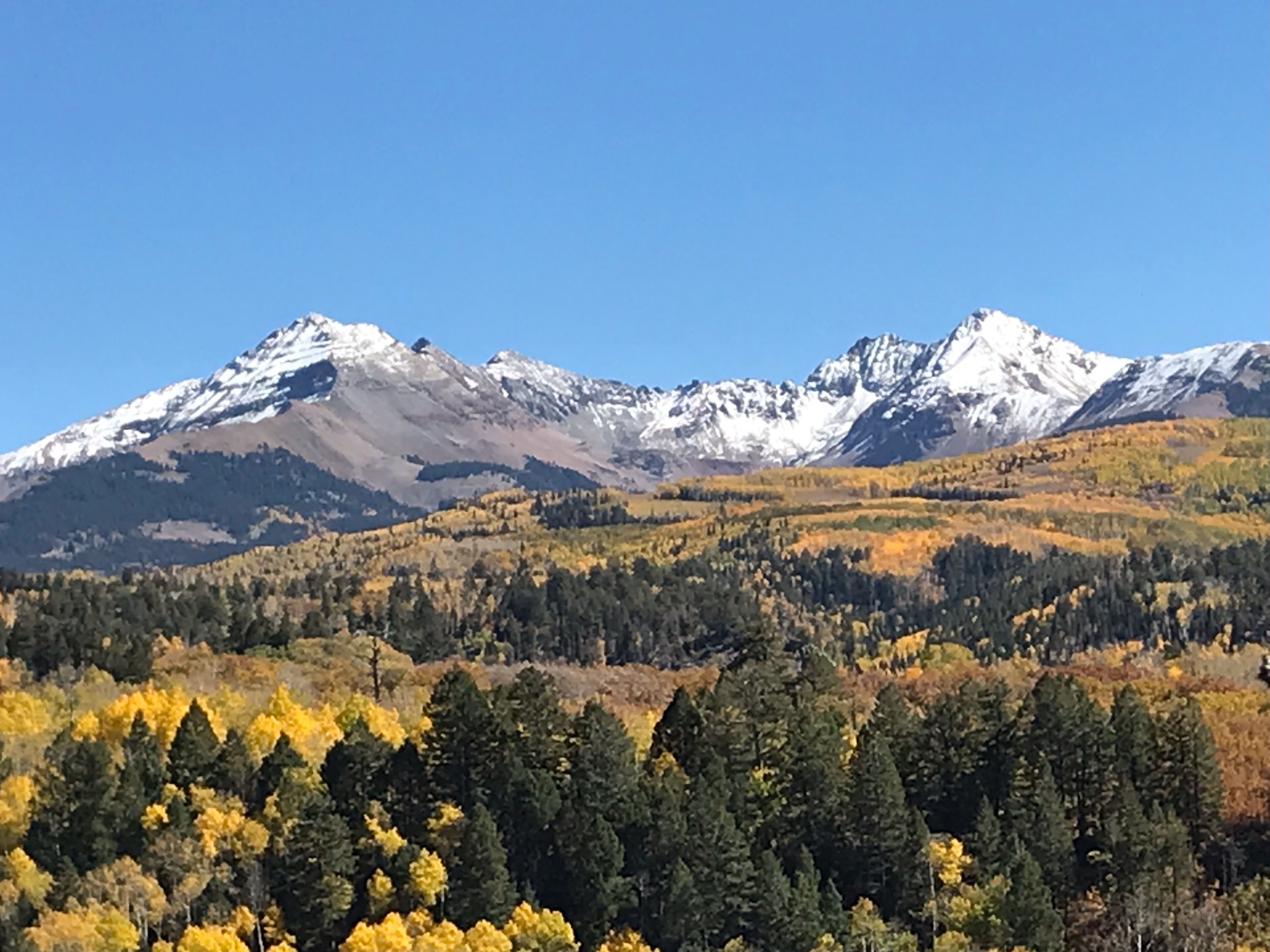
Outside my window, the mountain peaks are sharp with early snow. The sky is nearly always blue here, an adjustment for this newcomer from the moody Northeast. I’ve always loved variable weather, sudden storms, gusty wind, a whole day of rain. The relentless sunshine feels a bit like the glare of house lights in an auditorium after a play where I was invited into another reality. I never feel quite ready to leave the world of imagination just as I rarely want to see life fully illuminated.

It has been five years since I’ve written a blog. During that time, I’ve published two more books and a chapbook, plus numerous magazine and anthology publications. I’ve finished the fifth draft of my novel (one of two I’ve struggled with for years) and I’ve moved over two thousand miles away from both people and landscape I treasure. I’ve also deleted my Twitter account. Change can be sustaining or crippling. I’m in the process of embracing where I am now as I try to learn this landscape and culture. It is not an easy process for a person in love with coastal landscapes and 30+ year friendships. In an inexplicable way, I have always felt the sea saved me. As I said in my title short story,” Impossibly Small Spaces”, “Water has an enormous capacity for listening”. 

Fear as Narrator and Catalyst

•September 3, 2017 • Leave a Comment

IMG_2913


I haven’t written a blog post for a couple of years. During that time, fiction’s influence on my life has deepened. I look to possible narrators to understand the turbulence and rage that seems more dominant than ever in modern life.

Where I live, it is quiet most of the time. Deer nibble at the dry grass and I can spend hours watching hummingbirds at the feeder. They have developed a kind of courage, continuing to sip sugar water with their long and gorgeous beaks as I sit in a nearby chair. Hunger is survival. When does need become strong enough to overpower fear? So many fears curtail our actions. Although I need to speak out and stand up for the rights of all my fellow travelers, I dislike huge gatherings. Even an annual writing conference is overwhelming to me. If I can hide behind a table at the book fair, chatting with people one at a time, I’m much happier.

Writers know solitude. Although some of us appear gregarious, it is a persona we have developed. I learned to converse with strangers early in life. I want to hear their stories. Sometimes people sense this and reveal intimate details of their lives to me. This has happened in grocery stores, bank lines, restaurants, and even walking down the street. There is a familiarity to the human condition. No, you are not alone. Yes, I have been taken down by sadness and flattened by love as well.

Although we live in frightening times, individuals, like characters in a story, continue to live their lives. They worry about their children, invite love in, as impractical and risky as that may be. Perhaps they neglect themselves or get lost in grief. Being human means facing our fears, if not now, then at a future date.

Writing is a way of understanding. As my characters navigate obstacles in their lives, I, too, develop empathy for people who aren’t like anyone I know. What characteristics do I find abhorrent? Is there a path to communicating with people whose way of being in the world is offensive to me? I do not have the answers, only more questions. Writing has saved me many times and I have to believe that art, music, and writing will continue to unite us.

I saw many landscapes this summer–the yellows and reds of Copenhagen with its canal boats, the Grand Tetons with their jagged peaks. There were prong-horns, elk and bison, canyons and mountain ranges tipped with snow, even in August. Walking by a creek in Jackson, Wyoming, I passed people on bicycles, families, dogs on leashes. In Estonia, I didn’t understand the language but I sipped tentatively at the beer and I happily tried marinated raw fish in Denmark. I am lucky to have seen many places. It gives me appreciation for the diversity of both landscape and people and it sharpens my resolve to move quietly and courteously through the world. The truth is: most of us are awake and engaged. We want beauty in our environment and in our lives. My characters do not always get there in the course of a story but like us, they are on a path to greater understanding.


W